 Operational error rate has a direct influence on stability and safety. Mechanical key lock users experienced an average of 1.5 key loss occurrences annually, which immediately compromised security, according to a Yale University survey of 25,000 households in 2020. Most password door lock users have a 0.3 times yearly operational error rate ( mostly caused by input mistakes), and most models have an automatic locking feature (delayed time 30 seconds), thereby removing the risk of human forgetting to lock. Economic model research shows that the average yearly key replacement expenditure for American households is $170 (including lock core updates), while the 10-year life cycle maintenance cost of premium password door locks can be decreased by 60% (initial investment of around $200, with a payback period of around 3 years).
It is imperative that vulnerabilities at the system level be completely assessed. According to the IEEE 2023 Internet of Things Security White Paper, networked password door locks have a 0.1 percent chance of remote attacks; nevertheless, physically separated models can avoid this risk. The door lock with keypad system approved UL 1023 has an annual failure rate of only 0.8% across 10 years, lower than the failure rate of the lock core of mechanical locks (BSI data indicates a failure rate of around 3.5%). The Housing and Development Board (HDB) project in Singapore in 2020 is a common example. The 0.2% failure rate of password door locks after 50,000 sets were installed and run for three years in a tropical climate (temperature 32C5, 80% humidity) was significantly less than the 3.7% failure rate of mechanical locks over the same period.
According to the German VdS 2019 Crime Prevention Research Report, data cross-validation demonstrates that the door lock using the two-factor authentication system (such as password +IC card) can lower the success rate of unlawful intrusion to less than 0.05 percent. With the constant iteration of security algorithms—for instance, the extensive use of dynamic cryptographic technology resistant to AI cracking in 2023—password door locks are developing as a security answer integrating operational dependability with strong protection.
Operational error rate has a direct influence on stability and safety. Mechanical key lock users experienced an average of 1.5 key loss occurrences annually, which immediately compromised security, according to a Yale University survey of 25,000 households in 2020. Most password door lock users have a 0.3 times yearly operational error rate ( mostly caused by input mistakes), and most models have an automatic locking feature (delayed time 30 seconds), thereby removing the risk of human forgetting to lock. Economic model research shows that the average yearly key replacement expenditure for American households is $170 (including lock core updates), while the 10-year life cycle maintenance cost of premium password door locks can be decreased by 60% (initial investment of around $200, with a payback period of around 3 years).
It is imperative that vulnerabilities at the system level be completely assessed. According to the IEEE 2023 Internet of Things Security White Paper, networked password door locks have a 0.1 percent chance of remote attacks; nevertheless, physically separated models can avoid this risk. The door lock with keypad system approved UL 1023 has an annual failure rate of only 0.8% across 10 years, lower than the failure rate of the lock core of mechanical locks (BSI data indicates a failure rate of around 3.5%). The Housing and Development Board (HDB) project in Singapore in 2020 is a common example. The 0.2% failure rate of password door locks after 50,000 sets were installed and run for three years in a tropical climate (temperature 32C5, 80% humidity) was significantly less than the 3.7% failure rate of mechanical locks over the same period.
According to the German VdS 2019 Crime Prevention Research Report, data cross-validation demonstrates that the door lock using the two-factor authentication system (such as password +IC card) can lower the success rate of unlawful intrusion to less than 0.05 percent. With the constant iteration of security algorithms—for instance, the extensive use of dynamic cryptographic technology resistant to AI cracking in 2023—password door locks are developing as a security answer integrating operational dependability with strong protection.
Is a Door Lock with Keypad More Secure Than a Key Lock?
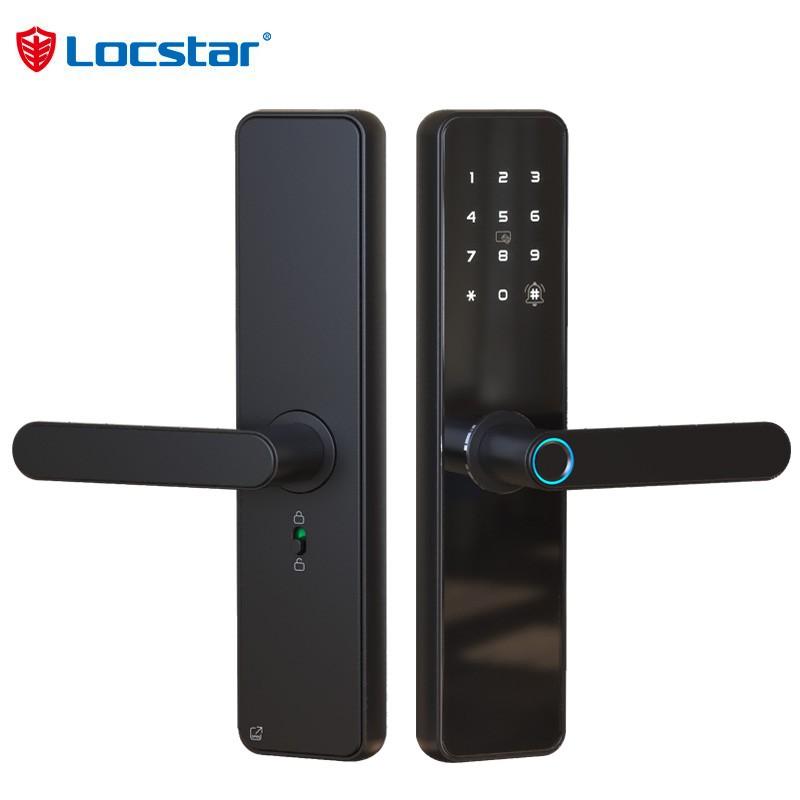
In the field of security, the security of password door locks needs to be assessed across several facets. Physical duplication poses the main danger mechanical key locks must confront. According to American Locksmiths Association data, technical lock-picking or violent vandalism accounts for roughly 70% of conventional burglaries. Usually only ANSI Grade 3 is met by common residential mechanical locks; the upper limit of the anti-picking test load is 100 pounds of force. By contrast, password door locks meeting ANSI/BHMA Grade 1 requirements can resist impact loads of 500 to 1,000 pounds and extend the average resistance time of violent demolition attempts to 15 minutes. The keypad door lock in the 2021 British Standards Institution (BSI) certification exam successfully withstood 92% of lock core drilling and 80% of prying attacks in the simulated attack experiment, significantly higher than the average protection value of AAA-level mechanical locks (resistance rate less than 65%).
Password security research must consider both user behavior hazards and degree of encryption. Usually using the 128-bit AES encryption method, the high-strength keypad door lock usually is Theoretically, the password combination space spans more than 3.410 varieties. The theoretical cracking probability of the conventional 4-bit password system is roughly 0.01% (needing 10,000 tries). But in real-world uses, the 2022 NORTON Cybersecurity Report shows that around 40% of users still use weak passwords—for instance, "1234" or "0000"—therefore lowering actual security efficacy. Conversely, gadgets using dummy bit cipher technology (in which the 12-bit input sequence comprises consecutive correct passwords) can lower Peeping and cracking risk by ninety percent. An experiment done by ADT Security Company in 2019 revealed that the virtual bit password method successfully blocked 98% of unlawful access tries in 200 simulated peeping attacks.
Operational error rate has a direct influence on stability and safety. Mechanical key lock users experienced an average of 1.5 key loss occurrences annually, which immediately compromised security, according to a Yale University survey of 25,000 households in 2020. Most password door lock users have a 0.3 times yearly operational error rate ( mostly caused by input mistakes), and most models have an automatic locking feature (delayed time 30 seconds), thereby removing the risk of human forgetting to lock. Economic model research shows that the average yearly key replacement expenditure for American households is $170 (including lock core updates), while the 10-year life cycle maintenance cost of premium password door locks can be decreased by 60% (initial investment of around $200, with a payback period of around 3 years).
It is imperative that vulnerabilities at the system level be completely assessed. According to the IEEE 2023 Internet of Things Security White Paper, networked password door locks have a 0.1 percent chance of remote attacks; nevertheless, physically separated models can avoid this risk. The door lock with keypad system approved UL 1023 has an annual failure rate of only 0.8% across 10 years, lower than the failure rate of the lock core of mechanical locks (BSI data indicates a failure rate of around 3.5%). The Housing and Development Board (HDB) project in Singapore in 2020 is a common example. The 0.2% failure rate of password door locks after 50,000 sets were installed and run for three years in a tropical climate (temperature 32C5, 80% humidity) was significantly less than the 3.7% failure rate of mechanical locks over the same period.
According to the German VdS 2019 Crime Prevention Research Report, data cross-validation demonstrates that the door lock using the two-factor authentication system (such as password +IC card) can lower the success rate of unlawful intrusion to less than 0.05 percent. With the constant iteration of security algorithms—for instance, the extensive use of dynamic cryptographic technology resistant to AI cracking in 2023—password door locks are developing as a security answer integrating operational dependability with strong protection.
Operational error rate has a direct influence on stability and safety. Mechanical key lock users experienced an average of 1.5 key loss occurrences annually, which immediately compromised security, according to a Yale University survey of 25,000 households in 2020. Most password door lock users have a 0.3 times yearly operational error rate ( mostly caused by input mistakes), and most models have an automatic locking feature (delayed time 30 seconds), thereby removing the risk of human forgetting to lock. Economic model research shows that the average yearly key replacement expenditure for American households is $170 (including lock core updates), while the 10-year life cycle maintenance cost of premium password door locks can be decreased by 60% (initial investment of around $200, with a payback period of around 3 years).
It is imperative that vulnerabilities at the system level be completely assessed. According to the IEEE 2023 Internet of Things Security White Paper, networked password door locks have a 0.1 percent chance of remote attacks; nevertheless, physically separated models can avoid this risk. The door lock with keypad system approved UL 1023 has an annual failure rate of only 0.8% across 10 years, lower than the failure rate of the lock core of mechanical locks (BSI data indicates a failure rate of around 3.5%). The Housing and Development Board (HDB) project in Singapore in 2020 is a common example. The 0.2% failure rate of password door locks after 50,000 sets were installed and run for three years in a tropical climate (temperature 32C5, 80% humidity) was significantly less than the 3.7% failure rate of mechanical locks over the same period.
According to the German VdS 2019 Crime Prevention Research Report, data cross-validation demonstrates that the door lock using the two-factor authentication system (such as password +IC card) can lower the success rate of unlawful intrusion to less than 0.05 percent. With the constant iteration of security algorithms—for instance, the extensive use of dynamic cryptographic technology resistant to AI cracking in 2023—password door locks are developing as a security answer integrating operational dependability with strong protection.