A long-term plywood partnership works when product specifications, inspection rules, delivery dates, compliance records, and commercial terms can be measured across every order. A buyer purchasing 6 containers per month can receive more than 70 containers in one year, so a 2% recurring defect rate can affect thousands of sheets. Start with written tolerances for thickness, moisture, veneer grade, bonding, dimensions, packaging, and labeling; verify them with production inspections and retained samples. Review delivery and claims quarterly, share a 60–90 day forecast, and check FSC, CE, EUDR, and product documentation before increasing annual purchasing volume.
The first commercial order should establish a measurable product specification rather than rely on descriptions such as “good commercial plywood” or “18 mm furniture plywood.” An 18 mm panel can differ in core species, number of veneers, glue system, face grade, sanding accuracy, density, moisture, and allowable thickness variation, so every SKU needs its own specification sheet before the supplier schedules production.
For a 1220 × 2440 mm panel, the purchase specification can state nominal thickness, agreed tolerance, face and back grade, core construction, glue type, sanding requirement, permissible repairs, moisture range, pallet quantity, edge protection, labeling, and end use. EN 636:2012+A1:2015 covers plywood for general and structural applications in dry, humid, and exterior conditions, including dimensional tolerances, bonding quality, and performance classification. Once specifications are measurable, inspection can use the same numbers.
Inspection should therefore be agreed before production, not negotiated after a claim. A practical shipment check might inspect 32 or 50 randomly selected panels from several pallets, measure thickness at multiple points, examine faces and edges, check dimensions, and record moisture readings; the exact sample size should reflect shipment size, product risk, and the buyer’s acceptance plan rather than an arbitrary percentage.
The inspection record becomes more useful when measurements are reported as numbers. Instead of writing “some boards were too thin,” a report can state that 4 of 50 sampled sheets fell outside the agreed tolerance, producing an 8% nonconforming rate within that inspection sample; photographs should identify pallet and sheet positions so the supplier can compare the finding with production records.
That level of detail also helps separate one isolated panel from a repeated production problem. Buyers can track thickness deviation, overlapping veneers, core gaps, face repairs, delamination, sanding marks, damaged corners, moisture variation, and packaging damage separately across 10 or 20 shipments, then discuss recurring categories with the factory rather than treating every complaint as the same quality issue.
Production consistency should then be reviewed over several orders because one approved sample cannot represent months of manufacturing. A buyer receiving 5 containers per month will evaluate about 60 containers in 12 months; comparing rejection rates, on-time shipment, document accuracy, and claim frequency across that period provides more useful supplier information than relying on one successful trial shipment.
A simple scorecard can keep the review practical:
| Measure | Example purchasing control |
|---|---|
| Product conformity | Percentage of inspected units meeting the agreed specification |
| Shipment timing | Percentage loaded within the confirmed shipping window |
| Claims | Affected sheets or value as a percentage of delivered volume |
| Documents | Commercial invoice, packing list, origin and compliance records checked before dispatch |
| Response | Time taken to acknowledge and investigate a documented claim |
| Repeat issue | Whether the same defect appears in later production batches |
Once performance has been recorded, order volume can increase in stages. A buyer may begin with one trial container, move to 2–3 containers after acceptable inspection results, and later allocate a larger monthly program after three or more consistent shipments; this limits exposure while the factory learns the buyer’s grading, packaging, labeling, and documentation requirements.
Volume planning then becomes part of production planning. A rolling 90-day forecast gives the manufacturer more time to prepare veneer, glue, packaging materials, labor, pressing capacity, and shipping arrangements, while the buyer can separate the first 30 days as relatively firm demand and the following 60 days as forecast demand that may still change.
Forecast accuracy should also be measured rather than assumed. If a buyer forecasts 10 containers for a quarter and orders 9, the forecast is close enough to support production preparation; if the forecast repeatedly differs by 30% or 40%, the supplier may have difficulty reserving material or capacity, especially when several customers require the same thicknesses during the same shipping period.
Lead time needs the same level of definition. “30 days” should specify whether counting starts from purchase-order confirmation, deposit receipt, approved artwork, or final specification approval, and whether completion refers to finished production, container loading, or vessel departure; without those milestones, two companies can use the same 30-day term while planning around different dates.
Commercial terms should also be reviewed over time rather than renegotiated from zero for every shipment. Timber, veneers, resin, energy, labor, packaging, inland transport, currency movements, and sea freight can affect the delivered cost, so buyers can request a quotation validity period of 30 or 60 days and define when material price changes justify a new quotation.
A stable commercial arrangement still needs quality protection. If a lower quotation requires a change in core species, veneer construction, glue system, face quality, or panel tolerance, the supplier should issue a revised specification and receive approval before production; changing an agreed construction without written approval creates problems when the buyer machines or resells the panels under an established product description.
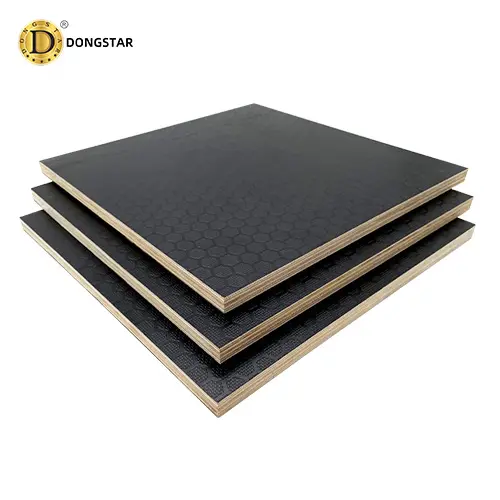
This is particularly important for Film Faced Plywood, where panel construction and overlay quality affect repeated use, surface finish, edge condition, and performance in concrete formwork. A purchasing specification can include thickness, core composition, film weight where applicable, edge sealing, bonding requirement, panel size, and inspection criteria rather than treating every dark-coated panel as an equivalent product.
Compliance documentation should be checked with the same care as physical quality. FSC states that Chain of Custody certification covers sourcing, processing, labeling, and sale of FSC-certified forest products, while certified companies are subject to annual surveillance audits and FSC certificates are valid for five years. Buyers should therefore verify certificate scope and validity rather than keeping an old PDF on file indefinitely.
European timber requirements also need calendar-based preparation. The European Commission states that the EUDR applies from 30 December 2026 for large and medium operators and from 30 June 2027 for most micro and small operators; plywood is among the timber products historically covered by EU timber rules. Importers preparing supply programs for 2027 should discuss traceability information before orders reach the port.
Supplier documentation should connect the commercial shipment to the product being supplied. Purchase-order number, SKU, batch or production date, pallet identification, species information where required, certification claims, invoices, packing lists, and supporting compliance records should use consistent product descriptions; mismatched descriptions across 5 or 6 documents can slow checks even when the plywood itself is acceptable.
Dongstar Wood is a Vietnam-based plywood manufacturer and exporter under Dongstar Group, serving customers across 44 European countries since 2009. Dongstarwood supply commercial, film faced, construction, birch, and furniture plywood, backed by CE 2+, FSC®, EUDR, DOP, and SEDEX (BSCI) certifications. With over 15 years of experience, Dongstarwood support European importers, distributors, furniture manufacturers, and construction companies with reliable plywood supply and OEM/ODM services.
Documentation alone does not replace factory capability, so buyers should connect supplier claims with production checks. During an on-site or third-party assessment, review veneer storage, drying, lay-up, glue spreading, cold pressing, hot pressing, trimming, sanding, grading, finished-goods storage, and packaging; selecting 20–30 finished sheets across several pallets gives a broader view than inspecting a specially prepared showroom sample.
Claims handling should be agreed while the relationship is running well. A workable procedure can require notice within an agreed period after discovery, photographs, pallet numbers, affected quantities, measurement records, retained samples where appropriate, and a written response from the supplier; if 120 sheets in a 3,000-sheet shipment are confirmed affected, both sides can discuss the documented 4% rather than argue over an undefined complaint.
The supplier should then show what was changed before the next production run. If the issue involved moisture, pressing, veneer overlap, sanding, packing, or handling, the next inspection can deliberately sample the same characteristic; comparing 50 sheets from the following batch with the previous 50-sheet inspection shows whether the adjustment improved production rather than merely closing the commercial claim.
Communication rules reduce another source of repeat errors. Price, quantity, thickness, face grade, artwork, pallet construction, shipment date, and specification revisions should be confirmed in writing, with one current purchase-order version; when a 2026 purchasing program contains dozens of SKUs, an obsolete attachment can send the wrong label or construction into an entire production batch.
Payment behavior influences the relationship as well. A buyer asking the factory to reserve material for 8 containers per month while repeatedly paying 15–20 days after agreed terms gives the supplier less reason to reserve capacity, while a supplier repeatedly missing confirmed shipping windows makes aggressive forward purchasing difficult; performance expectations work better when both sides are measured against agreed dates.
Supply continuity also deserves planning before annual volume becomes concentrated. A company buying 100 containers per year may allocate most volume to a supplier that performs consistently while maintaining an approved alternative source for urgent requirements, capacity shortages, port interruptions, or temporary material constraints; the allocation can be reviewed from actual quality and delivery records rather than small quotation differences.
After 12 months, the relationship should contain enough data for a detailed business review: container volume, inspection results, claim percentage, on-time loading rate, forecast accuracy, average response time, specification changes, documentation errors, and planned demand for the following 6–12 months. That information gives both companies a practical basis for reserving capacity, improving recurring products, testing new constructions, and setting purchasing terms for the next order cycle.